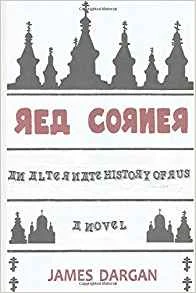
My latest book, Red Corner, An Alternate History of Rus, A Novel, gets its name from the Russian practice of having religious icons and/or crosses in one corner or area of a room. The Russian word for it:Кра́сный у́гол – Krasnyj úogol can be translated in a number of ways in English: ‘Beautiful corner’, ‘red corner’ or ‘icon corner’. I chose Red Corner for the title of my novel as it sounds a more poetic than the more prosaic icon corner; beautiful corner, however, went too much the other way, reminding me of something out of a women’s fashion magazine. The red corner in the novel plays a significant part for many of the characters, particularly Grand Duke Ivan III Vasilyevich and Archibishop Filofei. In one scene, Vasily Guba along with a few conspirators planning the assassination of Muscovite turncoat Tovarkov, turn to the Red Corner in the room:
They drew up the plan quickly: who was to be where and to do what. When they had finished, Guba told everyone to turn to the Red Corner.
Be it in the Kremlin itself or a common peasant’s izba, the Red Corner was the spiritual centre of any family home, and it was no different in Guba’s, where an icon of the Blessed Virgin with baby Jesus hung illuminated by candles. The men, after making the Sign of the Cross, bowed their heads in reverence, focusing their thoughts to the image and prayer. To their Lord, this would be enough for salvation and Divine acceptance for what they were going to do. They could all feel the presence of Mother and Child, and through them they gained inspiration, drifting deeper into the world of holy insight and spiritual bliss. Finally, the image began to talk to them as individuals, and gave them enough of God to complete the task.
They knew the mission they had chosen for themselves as being for the Good – not only for Novgorod’s, but for themselves as men of God, too.